Every fall and spring, the same conversation breaks out in offices, schools, and neighborhood group chats across Fairfield County: someone floats a Broadway trip, the group says yes immediately, and then the planning begins. Getting 30 people from Stamford to Times Square has never been the complicated part — that's just I-95 south for roughly an hour. What catches groups off-guard is what happens once the bus pulls into Midtown: there is effectively no commercial coach parking anywhere near the Broadway Theater District, the drop-off rules on the Times Square side streets are enforced aggressively, and the bus needs to leave after it drops your group, stage well west of the neighborhood, and return for a coordinated post-show pickup.
Layer in New York City's Congestion Relief Zone toll — which applies to every vehicle entering Manhattan south of 60th Street and currently runs $21.60 per entry for a large tour coach during peak hours — and the logistics of a Broadway group trip from Fairfield County get surprisingly specific, surprisingly fast.
This guide answers the questions the Broadway website doesn't: which streets take a legal bus drop-off, where the bus legally waits during a three-hour show, how the congestion toll works and what it adds to your budget, and why the timing difference between a Wednesday matinee and a Friday evening changes the whole plan. Once you've read through, fill out a quick quote request or call 475-550-7200 — a support team can match your group size to the right vehicle for your show date, and quotes come back in about a minute with no account required and no obligation.
Why a Charter Bus or Minibus From Fairfield County Makes the Broadway Trip Work
Here is what a group of 30 people without a bus looks like on a Broadway night: eight cars crawling south on I-95 through the Bronx, three different parking garages (each running $55–75 for four hours and none of them within two blocks of your theater), a group chat trying to coordinate who is parked where, and at least one car that takes a wrong turn on 9th Avenue and misses the first act. The group fragments before curtain. One car's designated driver skips the post-show dinner so they can pull around front.
By the time everyone finally finds each other outside the Shubert, it's 11:30pm and nobody wants to relive the drive home.
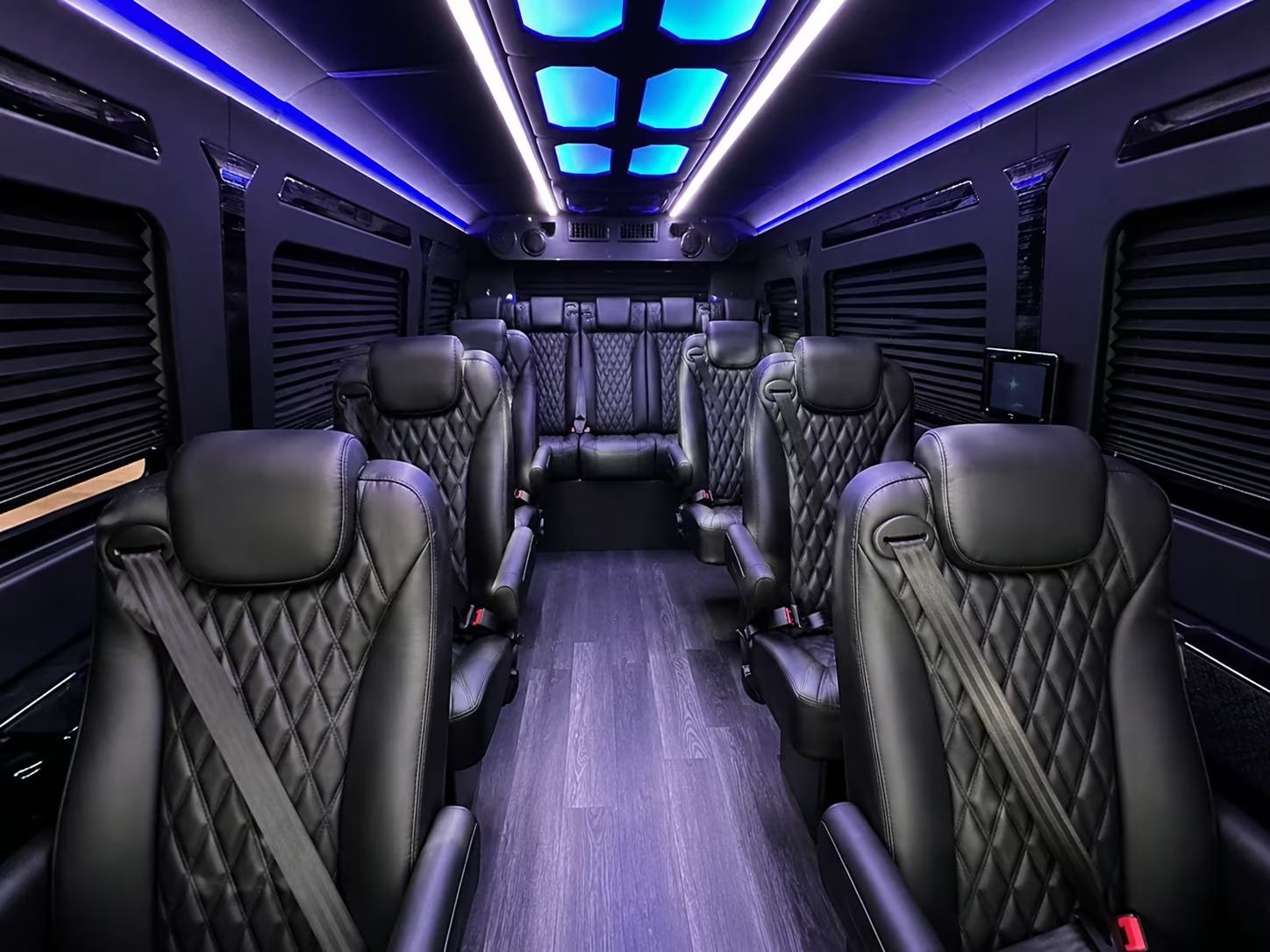
One minibus from Stamford, Norwalk, or Greenwich eliminates every part of that. Your group boards at one spot, arrives at the theater together, and gets picked up at one agreed point after the curtain call — with nobody navigating, nobody hunting for a garage, and nobody drawing a short straw over who stays sober to drive. For groups of 40 or more, a full-size charter bus handles the whole group in one vehicle: climate-controlled for November cold or summer humidity, overhead bins for coats and bags, onboard restrooms on select vehicles for the return drive.
That's the core reason the Broadway group trip from Fairfield County has always been a better experience with a bus — and once you know how the Midtown drop-off and staging actually work, it's straightforward to plan.
Charter Bus and Party Bus Drop-Off at the Broadway Theater District
Times Square is one of the most aggressively enforced commercial loading zones in New York City. What the rules require is expeditious pickup and drop-off only: passengers on or off, and the bus moves immediately. Lingering in the travel lane, stopping in a crosswalk, or pulling into an MTA bus stop will draw enforcement.
There is no standing, no waiting, no idling out front while 40 people gather their coats and take photos at the marquee.
For most Broadway houses, the legal drop-off runs on the west-side side streets between Eighth and Ninth Avenues, roughly from West 41st to West 52nd Streets. The core of the district — the Shubert (225 W. 44th St.), St. James (246 W. 44th St.), Majestic (247 W. 44th St.), Broadhurst (235 W. 44th St.), Booth (222 W. 45th St.), and Schoenfeld (236 W. 45th St.) — all cluster on 44th and 45th Streets between 7th and 8th Avenues, so a drop on the 44th or 45th Street block near Eighth Avenue puts your group steps from most of the popular houses. For theaters further north — Richard Rodgers (226 W. 46th St.), Lunt-Fontanne (205 W. 46th St.), Walter Kerr (219 W. 48th St.) — the same Eighth Avenue approach works, shifted a few blocks north.
One hard restriction applies everywhere in the Theater District: Fifth Avenue between 32nd and 59th Streets is a year-round prohibited bus pickup and drop-off zone, full stop. Stay on the western side of the district — 8th and 9th Avenue side streets — and you stay legal.
Charter buses from Fairfield County most commonly approach Midtown via the Lincoln Tunnel, which exits at 39th Street and Ninth Avenue. That's one of the cleanest possible entries for a Broadway trip: you surface from the tunnel on the west side of Midtown, two minutes from the nearest 44th-Street theater cluster. The approach route for your specific show and theater address gets confirmed when you book through the Stamford group transportation network, so there are no wrong-turn surprises surfacing from the tunnel ramp on show night.
Drop-off in the Theater District is expeditious only — passengers off, bus moves immediately. Any group that expects the bus to idle at the curb while everyone photographs the marquee or finishes a conversation will run into enforcement. The staging solution is the next section, and it's the part most Fairfield County groups don't know about until they're standing outside in the dark looking for a bus that's been circling on 10th Avenue.
Where Your Bus Waits During the Show: The Far West Side Layover
After dropping your group, the bus cannot pull around the corner and wait on 44th Street for three hours. There is no commercial coach parking in the Broadway Theater District — not on the theater side of the district, not on the Times Square perimeter, not anywhere between Seventh and Ninth Avenues from 40th to 54th Streets. The bus needs to relocate the moment your group reaches the sidewalk.
The NYC DOT-authorized layover zone for Midtown commercial vehicles is the Far West Side corridor, specifically the blocks along 11th and 12th Avenues from approximately West 33rd to West 51st Streets. Three staging blocks sit closest to the Theater District and are specifically listed among the authorized layover locations: West 41st Street between 11th and 12th Avenues, West 43rd Street between 11th and 12th Avenues, and West 44th Street between 12th and 11th Avenues. From there, the walk to most Broadway houses runs about 10–15 minutes along 42nd or 44th Street heading east.
Metered bus spots along these blocks run $20 per hour with a three-hour maximum, payable by credit card or the ParkNYC app. NYC prohibits bus idling for more than three consecutive minutes at most locations — with the exception applying only when temperatures drop to or below 40°F — so the engine runs on a timer through the wait, not a continuous idle.
For a typical Broadway production running 2.5 to 3 hours, the staging window fits within the three-hour metered maximum. The bus times its repositioning back toward the theater to arrive before the curtain call — not at the exact moment the doors open, when the side streets flood with post-show pedestrian traffic and every other vehicle is trying to reposition at once. Before the group walks into the theater, confirm your exact post-show meeting spot with every person in your party.
The most common post-Broadway scramble isn't a traffic problem — it's half the group waiting on the 44th Street side of the theater and the other half on 45th, neither group finding the bus because everyone assumed a different exit. Pick one spot ("back of the theater on 45th Street, between Seventh and Eighth"), name it in the group chat before curtain, and the pickup runs clean.
You can review the charter bus rules that govern these movements — drop-off requirements, layover zone rules, idling limits, and the route slip requirement operators must carry — on the NYC DOT charter and tour bus page. The Far West Side layover is standard operating procedure for every commercial coach in the Theater District, and booking through a network with Midtown experience means that timing and staging get worked into the itinerary upfront.
NYC Congestion Pricing and What It Adds to Your Broadway Bus Rental
New York City launched its Congestion Relief Zone toll on January 5, 2025 — the first congestion pricing program of its kind in the United States. The zone covers all of Manhattan at and below 60th Street, which means any charter bus dropping a group at a Broadway theater crosses into it. Since launch, the program has faced multiple legal challenges: NJ Transit sued, neighboring counties objected, and the Trump administration attempted to terminate it.
Every challenge so far has been defeated in court — a federal judge ruled the termination attempt unlawful and the Second Circuit rejected efforts to pause the tolling system — though the administration filed a further appeal in 2026. As of mid-2026, the Congestion Relief Zone remains fully operational. For trip planning purposes, this is a fixed cost — not a maybe.
The current toll structure for commercial vehicles, per the MTA's Congestion Relief Zone, breaks down by vehicle type:
- Large tour coaches and multi-unit trucks: $21.60 per entry during peak hours; $5.40 per entry overnight
- Small trucks and single-unit buses: $14.40 per entry during peak hours; $3.60 overnight
- Passenger cars: $9.00 per entry during peak hours; $2.25 overnight
Peak hours are 5am–9pm Monday through Friday and 9am–9pm on weekends. Overnight rates apply at all other times. The rates above launched at 60% of the originally planned full amounts — under the phased schedule, rates increase to 80% in 2028 and 100% in 2031.
A large coach at $21.60 today will pay approximately $28.80 per entry in 2028. The exemption for "buses" in the program applies specifically to qualifying commuter and transit buses (MTA routes, NJ Transit, school buses meeting specific criteria) — private charter buses and tour buses do not qualify and pay the full commercial rate.
The toll is charged once per entry per day, not per mile — which makes the staging decision in the previous section a budget matter as well as a logistics one. A bus that drops your group, stages on West 41st Street between 11th and 12th Avenues (still inside the zone), and repositions for pickup without crossing 60th Street pays the toll once. A bus that drops off, returns through the Lincoln Tunnel to New Jersey, and re-enters for pickup pays it twice — an extra $21.60 at peak hours.
Coordinated staging inside the zone isn't just about avoiding a long drive back; it's a $21.60 reason to stay put.
The overnight rate becomes relevant for evening shows. The 9pm threshold for overnight pricing falls right in the middle of a typical post-show window: if your bus entered the zone at 7pm for an 8pm curtain, it already paid the peak toll at entry. If it leaves the zone during the show and needs to re-enter at 10:30pm for pickup, that re-entry is in the $5.40 overnight range.
The clean move is one zone entry, one toll, staging inside throughout.
The current congestion toll for a large tour coach is $21.60 per entry during peak hours — the 60%-of-full rate since January 5, 2025, with increases scheduled for 2028 and 2031. Every Broadway trip from Fairfield County crosses the zone. Staging inside the zone between drop-off and pickup keeps it to one toll charge per trip.
Budget it as a line item when you compare quotes through the Stamford party bus prices page.
Matinee vs Evening Broadway Shows: Planning Your Charter Bus Trip from Fairfield County
The show time shapes every other planning decision — departure window, traffic exposure, return time, and which direction the traffic pressure runs. The two most common formats from Fairfield County are the Wednesday or Saturday matinee (2pm curtain) and the Tuesday-through-Saturday evening (8pm curtain), and they involve meaningfully different road conditions in each direction.
Matinee trips (2pm curtain, Wednesday or Saturday). Saturday matinees are the most popular format for school groups, family outings, and seniors; Wednesday matinees run slightly less crowded on the road. A Saturday morning departure from Stamford around 11:30am typically clears the morning rush window and holds to a 50–60 minute drive, arriving at the Theater District drop zone by 12:45–1pm — well ahead of the 1:45pm recommended pre-show arrival.
Post-show pickup falls around 4:30–5pm, which pushes your return drive right into the tail end of Saturday outbound traffic on I-95 northbound through the Bronx. Allow 75–90 minutes back to Fairfield County rather than the clean 50-minute morning run. Wednesday matinee has the most forgiving traffic profile of any day: a midday departure from Stamford around noon avoids both the morning and afternoon rush entirely, and the return drive at 5pm on a Wednesday moves well.
For school groups and corporate outings, the Wednesday window is worth pricing out even if a Saturday matinee seems like the default.
Evening trips (8pm curtain, Tue–Sat). The outbound drive is where planning pressure lives on an evening trip. I-95 southbound from Fairfield County between 4pm and 7pm is one of the most congested stretches in the Northeast — the Cross Bronx Expressway backs up, the George Washington Bridge approach slows, and what should be a 50-minute drive can stretch to 90 minutes or more on a Thursday.
Two strategies work: depart Stamford early, around 4:30–5pm, reach the Theater District by 6:15–7pm, and spend the time before curtain at a pre-show dinner near Eighth Avenue. Or depart later, around 7pm, when the rush has largely cleared, and run a clean 50-minute drive into an 8pm curtain with 10 minutes to find your seats. The risk of the late departure is that any Bronx incident on I-95 leaves no buffer.
The early departure adds time in the city, which many groups prefer anyway. Your return pickup at 10:30–11pm is the smoothest leg of the night — I-95 northbound at that hour runs cleanly back toward Fairfield County, and most groups are home by midnight to 12:30am.
One timing detail applies to both formats: the first 15 minutes after curtain on the Theater District side streets is the single most congested window of the evening. Every house in the 44th–48th Street block empties simultaneously. Rideshare surge pricing spikes.
Vehicles trying to reposition into those blocks at exactly curtain time compete with each other and with pedestrians flooding the crosswalks. Have the bus position to your designated pickup spot approximately 10 minutes before the listed curtain time — ahead of the post-show rush rather than in it — and make sure every person in your group knows the exact pickup address before the lights go down.
Rent a Bus to Broadway: Choosing the Right Vehicle for Your Group
The right vehicle for a Broadway run from Fairfield County comes down to headcount and the tone of the outing. Theater trips don't typically call for the party-bus configuration — you're riding to a show, not hosting a dance floor — but you do want climate control that handles November cold or August humidity on the ride in, enough seating so nobody is cramped for 40 miles, and storage for the coats, bags, and umbrellas that come with a show night in the city. Here's how the vehicle options stack up for a Broadway run.
| Vehicle | Typical seats | Best for | Key features for Broadway trips |
|---|---|---|---|
| 14-passenger Sprinter limo / Sprinter van | Up to 14 | Small private parties, birthday celebrations, VIP nights out | Premium leather, individual USB charging, tinted windows — easy Midtown maneuverability |
| 15–35 passenger minibus | ~15–35 | Most Fairfield County theater groups, school trips, corporate outings | Powerful A/C, plush reclining seats, overhead storage, tighter turning radius for Theater District side streets |
| 40–56 passenger charter bus | Up to 56 | Large groups, school systems, organizations taking 40+ people | Reclining seats, climate control, overhead bins, undercarriage bays, WiFi and power outlets on select vehicles, onboard restrooms |
For the majority of Fairfield County Broadway trips — groups in the 20–35 person range — a minibus is the practical fit. It maneuvers more cleanly on Midtown's west-side side streets than a 45-foot charter bus, handles the headcount without paying for empty seats, and gives everyone a reclining seat for the round trip on I-95. For school systems or organizations taking 40 or more people, the full-size charter bus keeps the group in one vehicle and the logistics simple — one drop-off point, one pickup point, no splitting across multiple vehicles trying to convoy through Midtown.
ADA-accessible vehicles are available through the network; include that note in your quote request with at least 48 hours of lead time before your date.
Not sure which size fits your group? Browse the full vehicle lineup or call 475-550-7200 — a support team can size the vehicle to your headcount and check availability for your show date on the spot.
Broadway Theater District Charter Bus Rental Prices from Fairfield County
A Broadway trip from Stamford or Norwalk typically runs 6–8 hours of vehicle time when you include the round-trip drive, the drop-off window, staging time during the show, and the post-show pickup. That block, combined with headcount, shapes the quote. To give you an idea of the planning ranges for Fairfield County Broadway runs:
- 15–35 passenger minibus: weekday rates run $200–$250/hr; weekend rates $200–$275/hr; per-day rates $1,100–$2,150
- 40–56 passenger charter bus: weekday rates run $200–$350/hr; weekend rates $200–$350/hr; per-day rates $1,350–$2,850
- 14-passenger Sprinter limo or van: weekday rates run $200–$325/hr; weekend rates $225–$350/hr; per-day rates $1,550–$3,150
Those are planning ranges — the real quote for your trip moves with the specific date, total hours, vehicle configuration, and what's available in the network for your show. The congestion toll adds a flat line on top: $21.60 per zone entry for a large coach at peak-hour rates, ideally paid once per trip with the staging approach described above. The tunnel tolls (GWB outbound on the return, if your bus routes through New Jersey) are separate items.
The per-head case for the bus comes together fast. A 40-passenger charter bus on a 7-hour Saturday evening trip might come to roughly $2,100 — about $52 per person. Run the same group in 10 cars: 10 parking garages at $55–75 each for four hours adds up to $550–$750 just in parking, before gas or tolls, and that's before counting the wear of navigating Midtown on show night.
Split across the full 40 people, the bus frequently beats the driving math even without counting the time and coordination savings. For your exact quote based on group size and show date, fill out the online form or call 475-550-7200 — pricing comes back in about a minute.
Getting There: Routes from Fairfield County to the Broadway Theater District
Stamford sits roughly 40 miles from Midtown Manhattan on I-95, which sounds like a short run until the Cross Bronx Expressway gets involved. Off-peak — a Saturday morning before 10am, a Sunday, or a weekday between 9am and 3pm — the drive holds at 50–60 minutes. During the weekday afternoon rush (4–7pm), that same stretch can stretch to 90 minutes or more, driven by congestion on the Cross Bronx Expressway and the approach to the George Washington Bridge.
Charter buses from Fairfield County heading to the Theater District most commonly approach via the Lincoln Tunnel: I-95 south from Stamford through the Bronx, across the GWB into New Jersey, south through New Jersey on I-495, and in through the Lincoln Tunnel at 39th Street and Ninth Avenue — surfacing directly on Midtown's west side, a five-minute drive to the Theater District drop zone. The GWB is currently toll-free for eastbound (inbound to New York) travel; the return crossing westbound carries the bridge toll on the way home.
An alternative for groups that prefer to stay in New York State the entire trip: take I-95 south across the Robert F. Kennedy (Triborough) Bridge into East Harlem, come south on the FDR Drive, and cut west across 42nd Street to reach the Theater District from the east side. This bypasses the New Jersey segment entirely but adds the 42nd Street cross-town run, which moves slowly on show nights. Either approach lands at the same drop-off on 44th or 45th Street; the choice comes down to bridge versus tunnel preference and the traffic picture on your specific date.
Either way, once the bus crosses below 60th Street heading south, the Congestion Relief Zone toll applies — $21.60 per entry at peak rates for a large coach.
| From… | Distance to Theater District | Off-peak drive time | Rush-hour drive time |
|---|---|---|---|
| Stamford | ~40 miles | 50–60 min | 90–120 min |
| Greenwich | ~34 miles | 45–55 min | 85–110 min |
| Norwalk | ~50 miles | 60–75 min | 100–135 min |
| Bridgeport | ~60 miles | 70–85 min | 110–150 min |
| Danbury | ~70 miles | 80–95 min | 120–150+ min |
Those times assume clear roads. Build in an extra 20–30 minutes of buffer on any event night — a Broadway opening, a holiday weekend, or a Saturday when multiple shows are running simultaneously. The one constant: the post-show return on I-95 northbound after 10pm is consistently the cleanest leg of the trip regardless of which direction you arrived from.
What to Know Before Your Broadway Group Trip
Book show tickets separately from the bus, and book both early. Broadway group sales — typically for parties of 10 or more, sometimes 20 — go through the individual theaters' group sales departments or through resources listed by the Broadway League. Group discounts of 20–50% off regular ticket pricing are available for many productions when booked early through the right channel.
Most shows popular with Connecticut groups — holiday productions, long-running musicals, touring companies coming through for limited runs — sell group blocks months in advance. Lock in your show date, then match the bus quote to the same date. Trying to add transportation at the last minute after buying group tickets is the harder sequence.
Pre-show dinner is part of the itinerary, not an afterthought. The corridor between Eighth and Ninth Avenues from West 44th to West 51st Streets — commonly called Hell's Kitchen — has a concentration of pre-theater restaurants with early seating blocks specifically timed around 8pm curtains. A 5:30pm reservation means dinner by 6pm and walking into the theater at 7:30pm without rushing.
If your bus drops at 5pm and the curtain is at 8pm, that three-hour window is the part most groups underplan. Confirm the reservation when you book the bus so the itinerary holds together.
Name the post-show meeting spot before the lights go down. Broadway theaters have at least two exits, often on different streets. Confirm the exact post-show pickup spot with everyone in your group before you find your seats — which street, which end of the block, which side of the street.
Send it as a message so it's in every phone. The 15 minutes after curtain on 44th and 45th Streets are genuinely chaotic, and having 35 people standing in different places looking for the same bus is a solvable problem that only requires a confirmed address.
Know that show run times vary significantly. Most Broadway productions run 2.5 to 3 hours including intermission, but some long-form shows push past three hours. Harry Potter and the Cursed Child, for example, has historically run in two parts.
Check the listed run time for your specific production when you plan the post-show pickup window. A 2-hour production means earlier pickup; a 3.5-hour show means a later one. Let that detail drive your pickup time when you finalize the itinerary.
ADA accessibility varies by theater, not just by bus. Broadway's historic houses differ in their accessibility setups — hearing loop availability, accessible seating configurations, and companion seating vary between buildings. Contact the individual theater directly about your specific needs before booking tickets.
For the bus itself, ADA-accessible vehicles are available through the booking network with 48 or more hours of advance notice in the quote request.
Holiday-season Saturday matinees book out early. The November–December stretch is the peak demand period for charter buses from Fairfield County to Broadway. School groups and holiday party outings compete for the same Saturday vehicle supply, and the right-size minibuses and charter buses fill weeks ahead of the popular dates.
If your trip falls in November or December, get the quote and confirm your vehicle well before the date is locked. For other times of year, two to four weeks of lead time is usually workable — but sooner is always better.
Frequently Asked Questions About Renting a Bus to Broadway
Where exactly does a charter bus drop off passengers for a Broadway show?
Drop-off happens on the Theater District's west-side side streets — typically along West 44th, 45th, 46th, 47th, or 48th Streets between Seventh and Eighth Avenues, depending on your specific theater. The drop is expeditious: passengers off, bus moves immediately. There is no waiting in the lane.
Fifth Avenue between 32nd and 59th Streets is a year-round prohibited bus pickup and drop-off zone. The exact approach and drop-off street coordinates to your theater's address, confirmed when you book.
Where does the bus actually go during a Broadway show?
There is no commercial coach parking anywhere near the Broadway Theater District. After dropping passengers, the bus relocates to the NYC DOT-authorized Far West Side layover zone — specifically the blocks along West 41st, 43rd, and 44th Streets between 11th and 12th Avenues, about a 10–15 minute walk from most Broadway houses. Metered spots along those blocks run $20 per hour with a three-hour maximum.
The bus repositions back toward your theater ahead of the post-show pickup window.
Does NYC congestion pricing apply to charter buses going to Broadway?
Yes. Every vehicle entering Manhattan at or below 60th Street is charged the Congestion Relief Zone toll — no exemption exists for private charter buses or tour coaches. The current rate for large coaches is $21.60 per entry during peak hours (weekdays 5am–9pm; weekends 9am–9pm) and $5.40 overnight.
The program launched January 5, 2025 and has survived every legal challenge so far, including an attempted termination by the Trump administration; as of mid-2026 it remains fully operational. Rates are scheduled to increase in 2028 and again in 2031. Budget the toll as a trip line item — it's charged per zone entry, so coordinating the bus to stage inside the zone between drop-off and pickup avoids a second charge.
How long is the drive from Stamford to the Broadway Theater District?
Off-peak — Saturday morning, midday any day, or late evening — count on 50–60 minutes on I-95 south. During the weekday afternoon rush (4–7pm), the same drive can stretch to 90–120 minutes through the Bronx and the George Washington Bridge approach. For evening shows with an 8pm curtain, the two reliable strategies are departing Stamford by 4:30–5pm to clear the worst of the rush and arrive by 6:15–7pm, or waiting until 7pm for a clean 50-minute run with minimal buffer.
The post-show return after 10pm on I-95 north is consistently the easiest leg of the trip.
What is the best post-show pickup timing?
The first 15 minutes after curtain on the Theater District side streets — when all shows in the 44th–48th Street block empty simultaneously — is the most chaotic window of the evening. Position the bus to your agreed pickup block about 10 minutes before the listed curtain, not at curtain. Most evening shows have an 8pm start; a 2.5–3-hour run means curtain call between 10:30 and 11pm.
Confirm your exact pickup spot with every person in your group before you walk in, so there's no post-show search across multiple exits.
What approach route do charter buses use to reach the Theater District?
Buses from Fairfield County most commonly approach via the Lincoln Tunnel, which exits at 39th Street and Ninth Avenue — right on Midtown's west side, a five-minute drive from the Theater District drop zone. The route runs I-95 south through the Bronx, across the George Washington Bridge into New Jersey, and east through I-495 to the tunnel. An alternative is the Robert F. Kennedy (Triborough) Bridge into Manhattan, then south on the FDR Drive and west across 42nd Street — this keeps the entire trip in New York State but involves navigating the cross-town 42nd Street run near show time.
How far in advance should I book a charter bus to Broadway?
For Saturday matinees in November and December — the peak period for Fairfield County Broadway groups — book as soon as your show date and headcount are confirmed. School groups and holiday outings from across the county compete for the same Saturday vehicle supply, and the right-size minibuses go early in that window. For spring and fall weekend dates, four to six weeks is comfortable.
For off-peak weekday trips, two to three weeks is often workable. The honest rule: the earlier you call, the more vehicle options are available and the better the rates. Call 475-550-7200 as soon as your tickets are locked in.
Can the bus make multiple stops — pre-show dinner pickup or a post-show stop on the way back?
Yes. Multi-stop itineraries are easy to arrange through the booking network. A standard Fairfield County Broadway itinerary might run: pickup in Stamford with an add-on stop in Greenwich or Norwalk → dinner drop in the Theater District area → post-show pickup → return to Fairfield County.
Post-show stops — a dessert spot in Midtown or a quick West Village detour — get built into the quote upfront so the total time and price are confirmed before you board. For groups combining a Broadway show with another NYC stop on the same day, the Stamford private event transportation page covers multi-stop custom itineraries.
Is a party bus or a charter bus better for a Broadway trip?
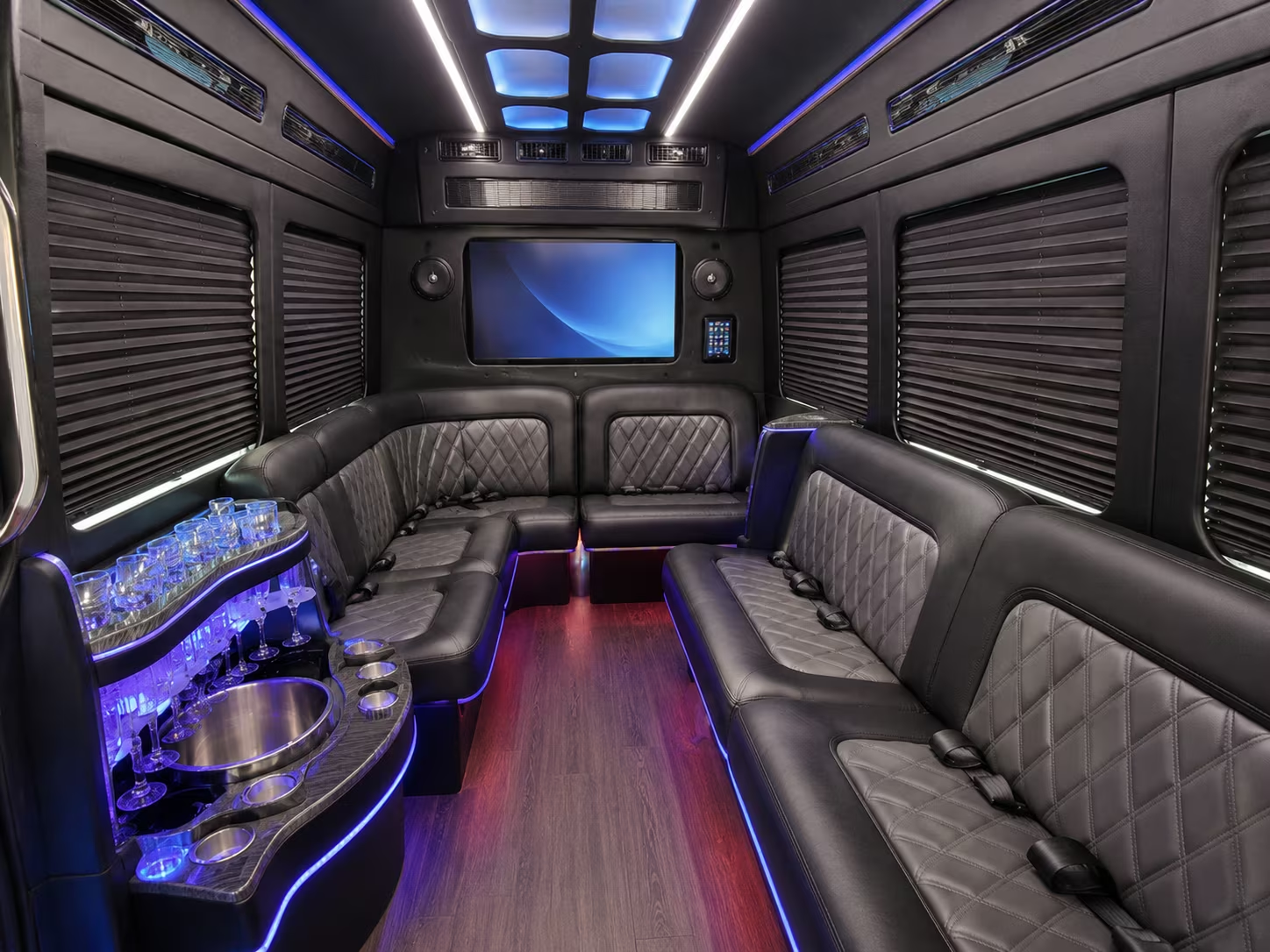
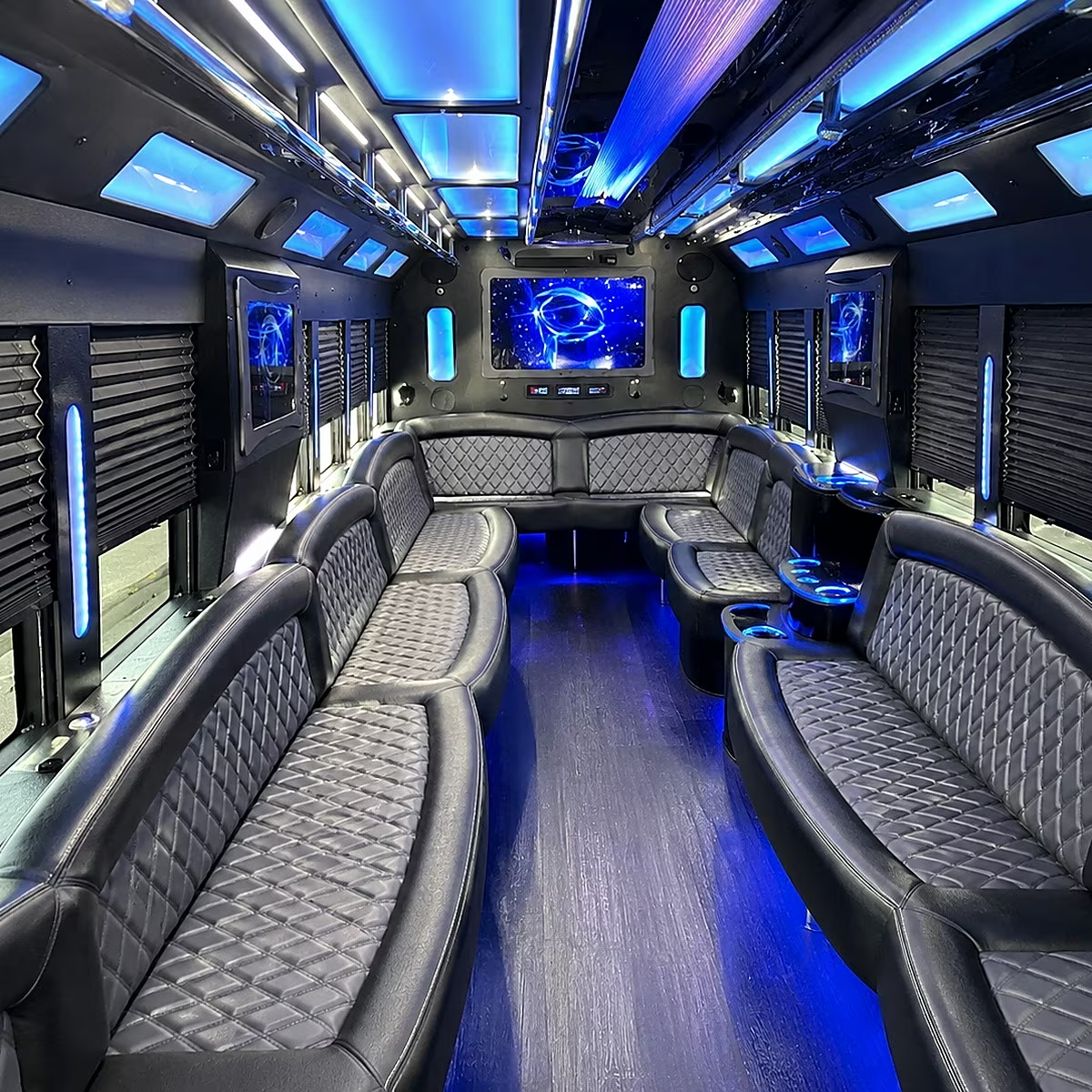
For most theater groups, the minibus or charter bus is the right fit — comfortable reclining seats, solid climate control, overhead storage for coats and bags, and straightforward logistics. A party bus (with LED lighting, a sound system, and the full celebration setup) makes sense if your Broadway night is framed as an occasion — a milestone birthday, a bachelorette afternoon, a company holiday event — where the ride is part of the experience. For standard theater outings, the minibus handles the job at a lower rate and with easier Midtown maneuverability.
Either way, getting a comparison quote through Stamfordpartybuscompany.com takes about a minute.
Book Your Broadway Theater District Bus Today
Getting 25 or 50 people from Fairfield County to a Broadway show and back is exactly the trip a charter bus or minibus rental handles cleanly — one pickup, one Theater District drop, one post-show coordinate, and everyone is back in Stamford or Norwalk by midnight. Stamfordpartybuscompany.com connects you with a large network of bus companies serving the Stamford area, so you can compare vehicle sizes and rates without calling company after company and waiting on callbacks that don't line up. No account required, no obligation, and the quote comes back in about a minute.
Fill out the online form or call 475-550-7200 any time. The Stamford party bus prices page has the full vehicle and rate breakdown if you want to compare before you call, and the Stamford group transportation page covers the full range of group trip types the network handles across Fairfield County. If your group is also planning a New York City run to Madison Square Garden — another venue where Midtown parking is a complete non-option — that guide covers the MSG drop-off and staging the same way this one covers Broadway.